There's a version of a photo booth that almost everyone has seen: a black box in the corner of a venue, a curtain, some props, a strip of four prints. It does what it says. It's fine.
Then there's what happens when a brand decides the booth itself is part of the campaign when the hardware, the aesthetic, the output, and the experience are built specifically for the moment. That's a different thing entirely.
This is the case for Custom Photo Booth in UK, and why more brands are treating them as a serious component of experiential strategy rather than a line item to tick off.
What Does "Custom Photo Booth" Actually Mean?
It's worth being specific, because "custom" gets used loosely.
At the basic end, custom means a branded overlay on a standard template and your logo on a generic print design. That's not really custom. It's a sticker on a product.
Genuine custom photo booth work starts from a brief. What's the brand? What's the event? What do we want guests to feel and share? What should the output look like? From those answers, the booth, its form, its finish, its output gets designed rather than selected from a catalogue.
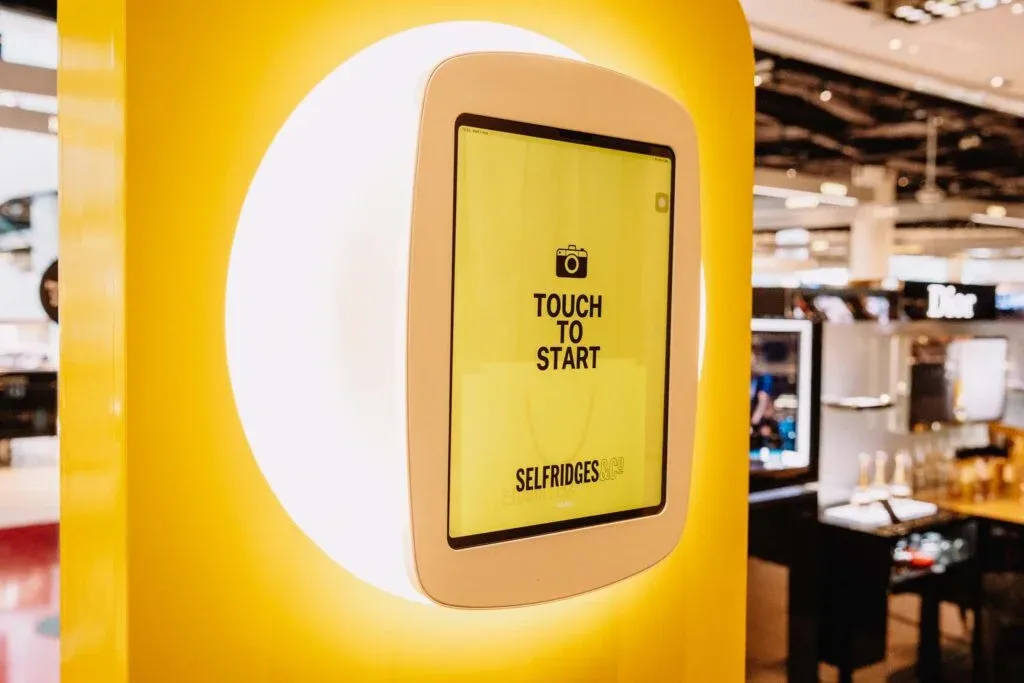
That might mean a bespoke enclosure built to match a retail environment. A booth finished in a specific material to reflect a product launch aesthetic. An output that looks like editorial photography rather than a photo strip. A custom interface that walks guests through an experience branded from start to finish.
The difference between these approaches is visible. Guests feel it. The content they share reflects it.
Why Off-the-Shelf Booths Fall Short for Brand Events
Standard photobooth setups are designed for universality. They work across many event types, many venues, many aesthetics. That flexibility is their strength and their limitation.
For a brand with a specific visual identity, a universal booth is a compromise. The output looks like a photo booth output, not a brand asset. The experience is recognisable as "the photo booth," not as something designed for this brand at this moment.
For consumer brands, fashion labels, luxury products, or any company investing seriously in experiential, that gap matters. Events are expensive. The content those events generate especially in a social media landscape where a well-executed activation can reach thousands should reflect the brand properly, not adequately.
A custom photo booth in UK events is increasingly the answer because it closes that gap. The experience is the brand. The output is content that looks like it came from the brand, not from a rental service.
What Brands Are Actually Doing With Custom Booths
The most interesting executions aren't just different-looking booths. They're experiences designed around a specific action or idea.
Retail activations where the booth is part of the store design - not placed in it, but integrated into it. Customers interact with the booth as part of their experience of the brand's space.
Product launches where the output directly references the product. If you're launching a perfume, the visual language of the prints should evoke fragrance, luxury, sensory experience. A standard photo strip does none of that.
Fashion and beauty brands using the booth as a content studio - producing images that look more like editorial shoots than booth snapshots. The lighting, the camera quality, the post-processing all contribute to this.
Experiential campaigns where the booth is a mechanic - you interact with it in a specific way to get a specific output. Games, challenges, personalisation. The booth becomes a reason to spend time with the brand rather than just a place to take a photo.
Trade shows and corporate events where the branded output travels home with guests in a way that generic merchandise doesn't. A print with a deliberately designed aesthetic gets kept. A generic strip gets lost.
Megabooth has worked across many of these formats - their portfolio shows activations for major brands including Vogue, Chanel, and Lululemon, which gives a sense of the range of what custom execution looks like in practice.
The UK Market for Custom Booths: What's Available
The UK has a reasonably mature market for experiential photo experiences, with London as the obvious centre. Several companies offer genuinely custom work; more offer customisation as an add-on to standard products.
The questions to ask when assessing a photobooth hire London quote for a custom brief:
Do they design or configure? Designing means starting from your brief. Configuring means changing settings and templates on existing equipment. Both have value, but for genuinely custom work, you want a company that designs.
Can they show you comparable work? Not just event photos, specific examples of custom builds for brands with similar requirements to yours. The more specific the examples, the more confident you can be that they understand the brief.
What's the lead time? Custom builds take time. If a company is promising a fully bespoke setup in two weeks, ask exactly what's bespoke about it.
Who owns the output? For branded content, you want to own the images fully for use in press, social, internal comms, whatever the campaign requires. Check this is in the contract.
What does the brand integration look like in practice? Ask to see examples of branded output from real events, not mock-ups. The gap between a mock-up and the real thing is where a lot of promises fall apart.
Custom vs. Standard: When Each Makes Sense
Not every event needs a fully custom booth. The investment is real, and there are events where a well-executed standard setup serves perfectly well.
Standard booth makes sense when:
- The event is primarily social (private parties, internal celebrations)
- Brand consistency isn't the priority
- Budget is the primary constraint
- The booth is a convenience, not a centrepiece
Custom booth makes sense when:
- The event is a brand moment a launch, an activation, a flagship experience
- Social content and sharing are core objectives
- The audience is brand-conscious and will notice quality
- The booth is a deliberate choice, not an afterthought
For companies serious about experiential marketing, the custom booth isn't a luxury upgrade. It's the appropriate tool for the job. A brand that spends six figures on an event and puts a generic booth in the corner has made a specific choice, even if they didn't think of it that way.
Practical Considerations for Custom Photo Booth Projects
Brief clearly. The more specific you are about aesthetic, output, brand guidelines, and guest journey, the better the result. Vague briefs produce vague results.
Build in enough lead time. Custom work done well needs time. Four to six weeks minimum for a bespoke build; more if the brief is complex.
Think about the output first. What should guests walk away with? What should the images look like? Work backwards from the output to the experience to the equipment. Not the other way around.
Involve the brand team. Photo booth output is brand content. The people who sign off on other brand assets should have a view on this too.
Test before the event. Any custom setup should be tested in full ideally in the venue before guests arrive. Problems discovered during the event are expensive in every sense.
If you're looking for a provider that handles custom briefs for major brands and events, Megabooth's photo booth hire London page is worth reviewing alongside their portfolio to get a sense of their range and output quality.
The Shift Happening in UK Experiential
The broader shift in UK experiential marketing is away from placing things at events and toward designing experiences. The photo booth has followed this curve from a corner fixture to a deliberate experience component that brands use to communicate who they are.
The companies doing this well aren't just providing a service. They're solving a creative brief. The distinction matters, and the output shows it.
For any brand planning a significant event in 2026 or beyond, the question isn't whether to have a photo booth. It's whether the booth they have is doing the work they need it to do.




Share this page with your family and friends.